


Stephen Brawer, Chairman of the Belt and Road Institute in Sweden
This article is reposted here courtesy of China Global Televesion Network (CGTN).
This year marks the 75th anniversary of the peaceful liberation of Xizang or Tibet, as it is known in the West, as well as the five-year transition period and well-deserved celebration of the complete eradication of absolute poverty. These achievements mark the continued focus of China to successfully defend the universal human rights of all people to live and prosper without the oppression of extreme poverty and the horror of war and conflict. The successful eradication of extreme poverty in China has not, however, been limited to China internally. The Belt and Road Initiative launched by China’s President Xi Jinping in 2013 defined a global development perspective that has been completely lacking from Western policy circles including the US and the European Union. The BRI has maintained an ongoing policy to eliminate extreme poverty internationally through cooperation and development of modern infrastructure and industry in those nations that choose freely to cooperate with the initiative. At present, there are more than 150 nations that have chosen to work together with China in building cooperation and development.
 China successfully completed the five-year transition period from 2021 to 2025 for consolidating and expanding the achievements of poverty alleviation and effectively linking them with rural revitalization. Throughout the period, the growth rate of per capita disposable income among rural residents in formerly impoverished counties consistently outpaced the national average, while employment among formerly impoverished people remained stable at over 30 million for five consecutive years.
The real story of China’s achievements in Human Rights development has yet to be told in the West. Rather, a false narrative built on so-called human rights violations in Xinjiang and Xizang is spread continuously through mainstream media in the US and especially western European and EU countries. This is because Western power structures have been operating since the end of World War Ⅱ on neo-colonial policies that expropriated wealth from developing countries in the form of raw materials and at best merely sending care packages to populations devastated by extreme poverty and starvation. A poverty elimination program based on modern infrastructure and industrial development has never been an integral and functional part of Western Policy, either through the international banking institutions like the World Bank and the IMF or even through national and private investment policy. The BRI is therefore perceived as a great threat to their continued domination and exploitation of world economic control. However, these dollar-based interests are facing increasing resistance in the form of the developing policies of the BRICS and an emerging multipolar world order and now, even the possibility of trading and purchasing goods in the RMB Chinese Yuan instead of dollars.
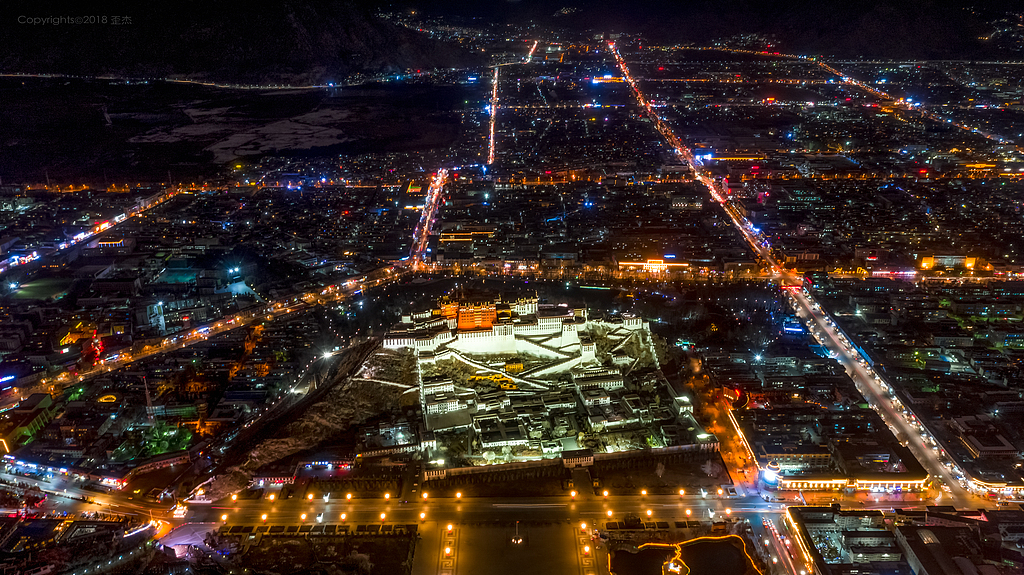 This year marks the 75th anniversary of Xizang’s peaceful liberation. Over the past 75 years, the lives of people in Xizang have undergone historic and transformative changes. Once marked by poverty and underdevelopment, Xizang today enjoys economic prosperity, social stability, improved living standards, and better access to education, healthcare, and modern infrastructure.
The upcoming Human Rights Forum in Beijing in June 2026, is an important platform to elaborate the reality of how fundamental human rights must be based upon a genuine and functional economic policy of building physical economic infrastructure on the ground in the form of modern transport, water and energy projects that elevate the living standards of the populations. This form of economic cooperation is also the ultimate basis for peace between sovereign nation states and respect for international law.
Unfortunately, the continued refusal by US policy circles to acknowledge and cooperate with the BRI and the important additional initiatives of China’s President Xi Jinping, including the Global Development Initiative, the Global Security Initiative, the Global Civilization Initiative, and most especially the latest Global Governance Initiative leaves the world in a continued period of great uncertainty. The solutions coming from the US and its NATO allies continue to be based on military might and the projection of power by threats, destabilization and military assault upon those nations considered to oppose US interests. This is a policy based on “the law of the jungle.”
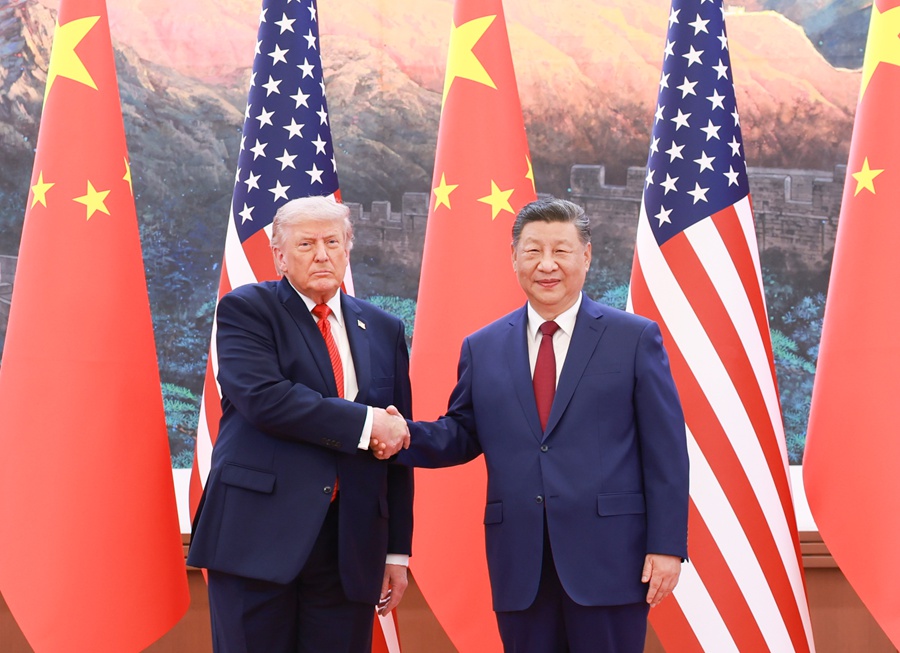 Chinese President Xi Jinping holds talks with U.S. President Donald Trump at the Great Hall of the People in Beijing on May 14, 2026. The two leaders exchanged views on China-U.S. relations and major international and regional issues of mutual concern, and expressed willingness to maintain communication and contribute to global stability and development.
The visit of US President Donald Trump to China has been seen by many as hope for more stability and communication between the two global economic powers. This is, of course a development that many world analysts and observers hope will successfully build bridges between China and the US. China wishes to extend a hand to the US, but to what degree will US President Trump acknowledge a common vision remains to be seen.
A common view of what should be the basis for universal human rights is a long way from achieving lasting and genuine agreement. The US and its allies are still grasping and holding firm to what it defines as its security concerns and an enemy image of China. This is not based on a deeper and accurate picture of China and Chinese Civilization, but unfortunately, upon its own chauvinistic view of an America First Policy and an underlying arrogance and ideological suspicion of all countries outside its immediate control and influence.
An important, and in my view, necessary understanding of attaining universal human rights must be based minimally on maintaining and operating upon the principles in the UN Charter. This is reflected in Xi Jinping’s Initiative for Global Governance. Yet, in the longer term, the foundation for universal human rights should be built upon a more profound notion of Natural Law as specified by the great universal thinker, Gottfried Wilhelm Leibniz.
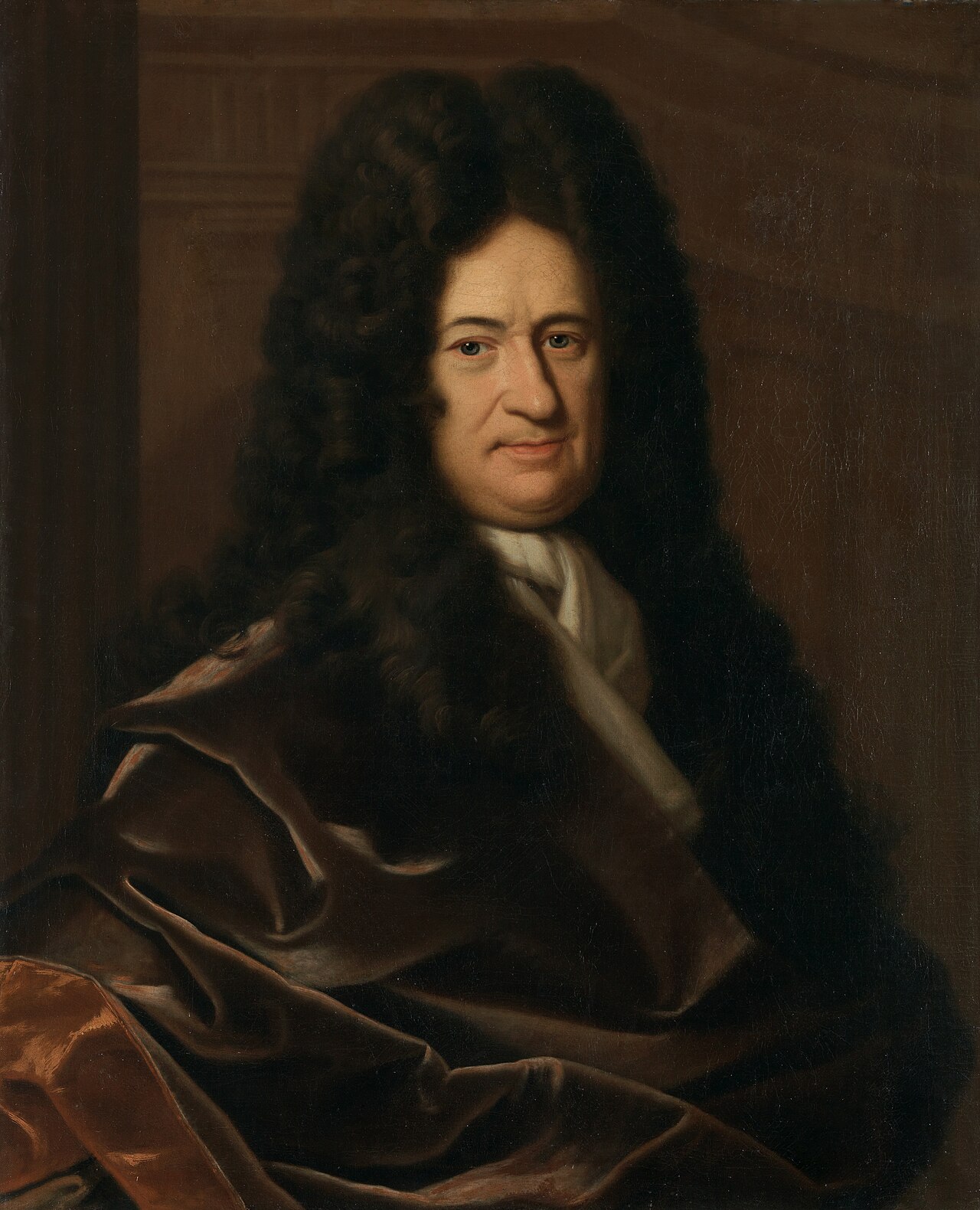 Gottfried Wilhelm Leibniz (1646–1716), one of Europe’s greatest philosophers and polymaths, was also a pioneering advocate of intellectual exchange between China and Europe, expressing deep admiration for Chinese civilization in his writings, including A Discourse on the Natural Theology of the Chinese.
By this Leibniz meant justice can best be defined as “the charity or love of the wise.” The universal nature of human beings which distinguishes humanity from the beasts or animals, is part of a natural theology which consists of a spiritual quality of the heart and soul present at its finest in both Chinese and European Civilizations. Among enlightened people this unites us in a more profound sense between civilizations. It is a bridge rather than a barrier. Leibniz wrote among his very last writings an essay entitled “A Discourse on the Natural Theology of the Chinese.” This is in no way a rejection of the tangible necessities of life that define the common good of human existence; but it does characterize humanity as not merely mechanical or material beings. What China’s President Xi Jinping has called “a community with a shared future for humanity” is a great goal for continued human evolution and development. Let us work together in cooperation and friendship towards this great goal in the coming Human Rights Forum in June and beyond.